


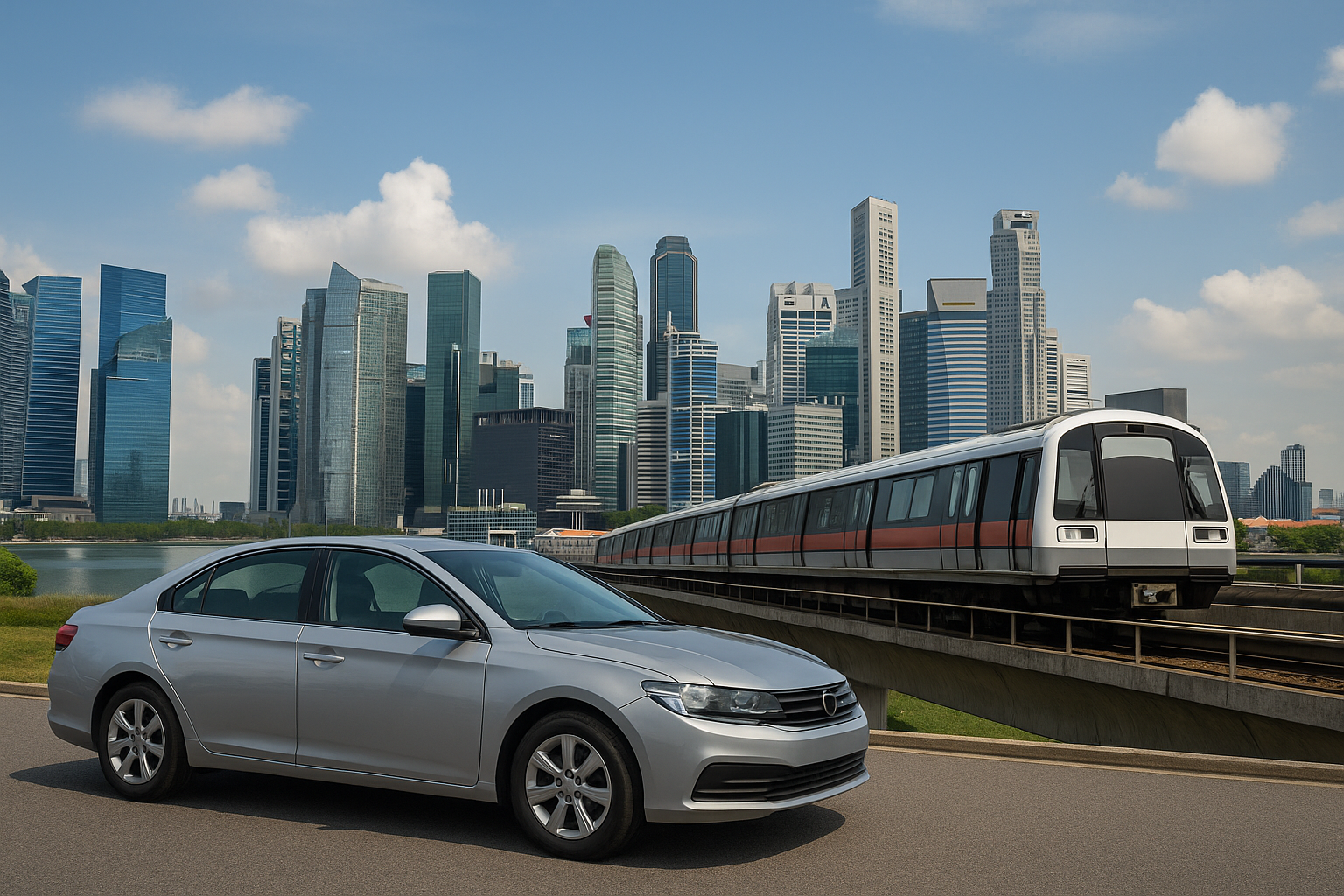
Car Leasing vs Daily Cabbing + Public Transport in Singapore (2025 Guide)
Category: Blog Articles
In a city where mobility is essential and time is money, car leasing is increasingly becoming a viable alternative to relying solely on public transport or daily cabbing. While Singapore’s public transport system is efficient and extensive, and ride-hailing services remain widely accessible, the real question many people are asking today is: How do I move through my day with the least friction, the most consistency, and the best balance of cost and convenience?
This shift reflects how work routines and personal lifestyles have changed. Hybrid work means no two days look the same. School schedules vary. Meetings may be in three different parts of Singapore. Errands and social commitments happen outside peak transit routes.
Mobility isn’t just transportation anymore — it’s a daily efficiency system.
And that’s where choosing between daily cabbing + public transport and car leasing becomes less about price alone, and more about predictability, time-control, and stress load.
1. Public Transport + Daily Cabbing: Works Well — Until Schedules Get Complex
Singapore’s public transit network remains one of the most robust globally. According to TODAY Online, a standard adult journey on MRT or bus costs S$0.99–S$2.26, making mass transit comparatively affordable versus many global cities:
https://www.todayonline.com/singapore/explainer-how-do-spores-bus-and-train-fares-compare-other-global-cities-2258566
However, most commuters don’t rely on public transport alone anymore.
Real daily movement now often includes:
- MRT/bus to office or school
- Ride-hailing for mid-day work travel
- Grab/Gojek for evening errands or late returns
- Cabs for locations far from MRT lines
This hybrid pattern adds variability to both time and cost.
Where Costs Rise Without You Noticing
Ride-hailing pricing fluctuates based on:
- Time of day
- Rain and weather conditions
- Location demand
- Peak-hour load (morning & evening)
Typical Monthly Cost Based on Daily Use
|
Daily Mobility Style |
Approx Monthly Cost |
Why It Rises |
|
MRT/bus only |
~S$80–S$120 |
Cheapest, but limited flexibility |
|
PT + ride-hailing 1–2 trips/day |
~S$900–S$1,400 |
Surge rates + varied travel schedules |
|
Ride-hailing majority of trips |
~S$1,400–S$2,200 |
Common for dynamic job roles & parents |
This means:
The more varied your daily schedule, the more unpredictable your mobility cost becomes.
2. The Hidden Cost: Time & Mental Load
Even when public transport and cabs are affordable, they introduce micro-delays and planning effort:
- Waiting for trains or transfers
- Refreshing ride-hail apps to get a driver
- Walking to pickup points
- Re-routing when buses are full
- Scheduling around public transport windows

These may feel minor individually — but small time delays multiple times per day can add up to hours lost per week.
In a country where work-life balance and mental bandwidth matter, time is not just a convenience factor — it’s quality of life.
3. Car Leasing: Predictable Cost, Consistent Convenience
Car leasing provides access to a vehicle for a fixed monthly fee — with no need to manage:
- COE bidding
- Depreciation risk
- Insurance coordination
- Servicing or workshop schedules
- Road tax renewals

The idea is simple:
You use the car.
Your leasing partner takes care of everything else.
How Car Leasing Changes Daily Mobility
|
Benefit |
Real-Life Impact |
|
Fixed monthly cost |
No surprises, easy budgeting |
|
Always-available mobility |
Leave any time, return any time |
|
Direct travel routes |
Cut down on waiting + transfers |
|
Comfort and privacy |
Useful for calls, kids, groceries |
|
Lower mental load |
Fewer daily planning decisions |
If your day has more than two destinations, car leasing often becomes time-superior — and sometimes even cost-competitive when compared to frequent ride-hailing.
4. Comparison: Daily Cabbing vs Car Leasing (Side-by-Side)
|
Factor |
Daily Cabbing + Public Transport |
Car Leasing |
|
Cost predictability |
Low (varies monthly) |
High (fixed monthly) |
|
Convenience |
Good but inconsistent |
Very high |
|
Time efficiency |
Depends on demand & timing |
Consistent and direct |
|
Comfort level |
Changes per driver/vehicle |
Stable, personal environment |
|
Best suited for |
Fixed, simple routines |
Dynamic schedules, families, professionals |
The key decision point:
How much flexibility does your life and work require?
5. Corporate Use Case: The Value Multiplies
For organizations, mobility affects:
- Meeting punctuality
- Client responsiveness
- Internal operations
- Team productivity
Car Leasing Benefits for Businesses
- Standardized monthly cost per vehicle
- No reimbursement paperwork
- Predictable fleet expenditure
- Consistent vehicle condition & presentation
- Scalable fleet contract management
This turns vehicle access from a cost burden into an operational asset.
6. Which Mobility Option Fits Your Life?
|
If your daily routine is… |
Best Option |
|
One destination, same hours, same route |
Public transport is efficient |
|
Multiple destinations, flexible schedule |
Car leasing is more time-effective |
|
Client-facing or travel-heavy work |
Car leasing supports reliability |
|
Family logistics (school, after-school, errands) |
Car leasing reduces friction |
This isn’t about choosing the “most expensive” or “cheapest” — it’s about choosing what supports your life rhythm.
7. The Bigger Picture: Mobility = Lifestyle + Performance
Mobility choices affect:
- Stress levels
- Daily time recovered
- Work performance
- Family coordination
- Well-being
When transportation stops being a series of small logistical challenges, you free up energy for what actually matters.
At Tokyo Century Leasing Singapore (TCLS), we design car leasing solutions around real daily mobility — whether you’re a professional managing multiple appointments, a family balancing routines, or a company supporting teams on-the-move.
💬 Speak with Tokyo Century Singapore to explore long-term leasing solutions tailored to your needs.
 Back to other articles